Guide
What Does ‘Ceremonial Grade’ Matcha Actually Mean?
The short answer
'Ceremonial grade' is not a rank issued by any Japanese authority. Japan's Ministry of Agriculture, Forestry and Fisheries (MAFF) publishes tea and matcha explainers that describe origin, cultivation and stone-milling — but never divide matcha into 'ceremonial' or 'culinary' tiers. JETRO's own matcha export page is silent on it too. The words are a vendor label, most often written into a product page by whoever is selling the tin.
Where you'd expect to find the standard — and don't
If a public standard existed, it would show up in one of three places: MAFF's tea pages, JETRO's export guidance for the roughly 80% of Japan's tea export value that powdered tea (including matcha) now represents, or Japan Agricultural Standards (JAS, 日本農林規格). We checked all three. MAFF's tea pages define matcha itself as tencha ground by stone mill and name Kagoshima, Kyoto and Shizuoka as core tencha-producing prefectures — but set no ceremonial/culinary line anywhere. JETRO's matcha page talks up rising overseas demand (cafés in the US, matcha cafés opening in France) without ever dividing matcha into grades, let alone defining one. JAS, the Ministry's general quality-and-labeling framework, has no matcha-specific ceremonial/culinary designation.
Even Japan's oldest producers don't use the words
That absence carries through to the producers themselves. Ippodo, a Kyoto tea merchant trading since 1717, and Marukyu Koyamaen, a grower-processor working in Uji since around 1704, both sell matcha across a wide price range — but neither's own product language reaches for 'ceremonial' or 'culinary.' Instead they describe suitability for usucha (thin, whisked tea) versus koicha (thick tea) and give each blend its own name (Ippodo's Ummon, Kanza and Sayaka; Marukyu Koyamaen's Kinrin, Yugen and Wako). 'Ceremonial grade' tends to arrive later — often added to a listing by an overseas reseller, not the producer's own copy.
How vendors fill the gap — in their own words
Search for the term and the pattern repeats: a company sells matcha, states plainly that no public standard exists, and then publishes its own scale anyway.
| Vendor | In their own words | What they use instead |
|---|---|---|
| Yunomi.life | 'Since there is no objective standard nor industry standard, this list below attempts to describe how we are grading the matcha sold on Yunomi.life.' | A grading list Yunomi built itself, applied only to what Yunomi sells |
| Naoki Matcha | 'In Japan, matcha is not categorized into “ceremonial” or “culinary” grade. In fact, there is no standardized matcha grading system with regulatory effect.' | Its own test: matcha meant to drink is called ceremonial, matcha meant to cook with is called culinary |
| Mizuba Tea Co. | 'The words “ceremonial” and “culinary” can only be judged based on the integrity of the company.' | Its own line of individually named ceremonial-grade teas at different price points, plus a culinary grade |
None of the three is wrong to say a bar doesn't exist publicly — they're right, and unusually candid about it. The catch is that each then becomes its own regulator, so a 'ceremonial' tin from one seller isn't directly comparable to a 'ceremonial' tin from another.
What to check instead
Because the label carries no external guarantee, judge the specifics that are independently checkable:
- Region and producer. Uji, Nishio, Yame and a handful of other areas carry real, checkable reputations; a named producer beats an unnamed 'Japan' origin.
- Cultivar, if the vendor states one (Samidori and Asahi are common shade-grown cultivars used for matcha).
- Harvest flush. First-flush (ichibancha) leaf is a factual, checkable claim tied to the spring harvest, not a marketing tier.
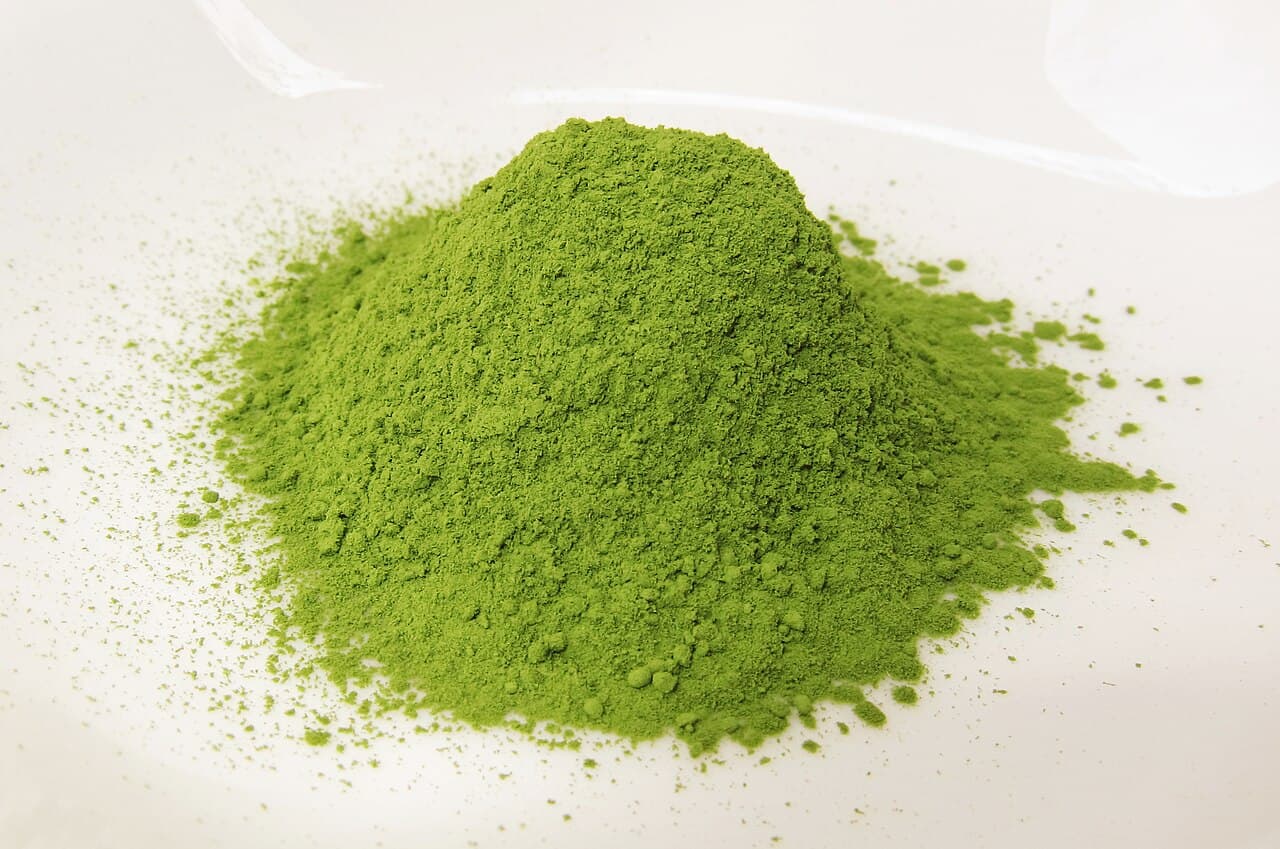
- Milling. MAFF's own tea pages define matcha as tencha ground by stone mill — a verifiable production-method claim, unlike 'ceremonial.'
- Price per gram. A number you can compute yourself and compare across vendors; see our Ippodo vs. Marukyu Koyamaen spec comparison for a worked example.
For the words themselves — where 'premium' and 'culinary' sit next to 'ceremonial,' and how to score each — the companion piece, Matcha grades explained, works through the vocabulary term by term. Once you've sifted a bowl, our guide to how to make matcha at home covers technique that matters more than the label ever will.
Sources
- MAFF: Tea overview (お茶のページ)
- MAFF: Types of tea (味わいや香りもさまざまなお茶の種類)
- JETRO: Matcha (抔茶) export pickup page
- MAFF: JAS (日本農林規格) overview
- Yunomi.life — Matcha Grades & Categories
- Naoki Matcha — Understanding the real difference between ceremonial and culinary grade matcha
- Mizuba Tea Co. — Ceremonial Grade Matcha vs. Culinary Grade Matcha
- Ippodo Tea — Matcha collection
FAQ
- Does Japan have an official matcha grading system?
- No. Neither MAFF nor JETRO defines 'ceremonial' or 'culinary' matcha, and JAS has no matcha-specific grade for either. What exists are vendor-applied labels.
- Is 'ceremonial grade' a meaningless or fake claim?
- Not fake — it's just unregulated. It's a real vendor-applied signal (typically meaning fine enough to whisk and drink straight), but it isn't backed by a public definition, so it varies by seller.
- If the label isn't standardized, what actually tells me the matcha is good?
- Region, named cultivar, harvest flush, milling method and price per gram all carry more verifiable information than the grade word on the tin.
This article is for information only, not health or medical advice — we describe tea, not what tea will do for your body. Prices, availability and harvest details change; always check the linked vendor or official page before buying. Outbound links to vendors are plain links: we hold no affiliate accounts and earn nothing if you use them (see /how-we-review).