Guide
Matcha Grades Explained: Ceremonial, Premium, Culinary — Whose Standard Is It?
The short answer
Three English words dominate matcha listings: ceremonial, premium, culinary. None of the three has a scorekeeper. As we lay out in what 'ceremonial grade' actually means, Japan's agriculture ministry (MAFF) and trade promotion body (JETRO) do not define any of them, and several sellers — Yunomi.life, Naoki Matcha and Mizuba Tea among them — say outright that they built their own scale because no public one exists. This piece scores the vocabulary itself: which words carry any outside authority, and which are just style.
Term by term
Ceremonial — implies leaf fine and mild enough to whisk into usucha and drink straight, traditionally linked to tea-ceremony use. No public definition; entirely vendor-judged.
Premium — a pure comparative with no floor. 'Premium' only means 'better than this same seller's other tier' — it says nothing about where a premium tin from one company sits next to a ceremonial tin from another.
Culinary — implies a coarser grind or later harvest intended for lattes, baking and ice cream, where bitterness is masked by milk or sugar. It's the most consistently used of the three across vendors (most agree it means 'not for drinking straight'), but it is exactly as unregulated as 'ceremonial' — Naoki Matcha's own copy puts the ceremonial/culinary split down to matcha companies' own 'integrity,' not a public standard, for both directions.
What actually is verifiable — a scorecard
| Claim on the label | Backed by a public standard? | How you can check it yourself |
|---|---|---|
| 'Ceremonial grade' | No | Nothing to check — it's the seller's own word |
| 'Premium' | No | Nothing to check — relative to that seller's other products only |
| 'Culinary grade' | No (but used more consistently) | The intended-use claim ('for lattes/baking') is usually accurate in practice, though the word itself is unregulated |
| First flush / ichibancha | Partially | Harvest timing is a real agricultural fact — look for a stated harvest month/year, not just the word |
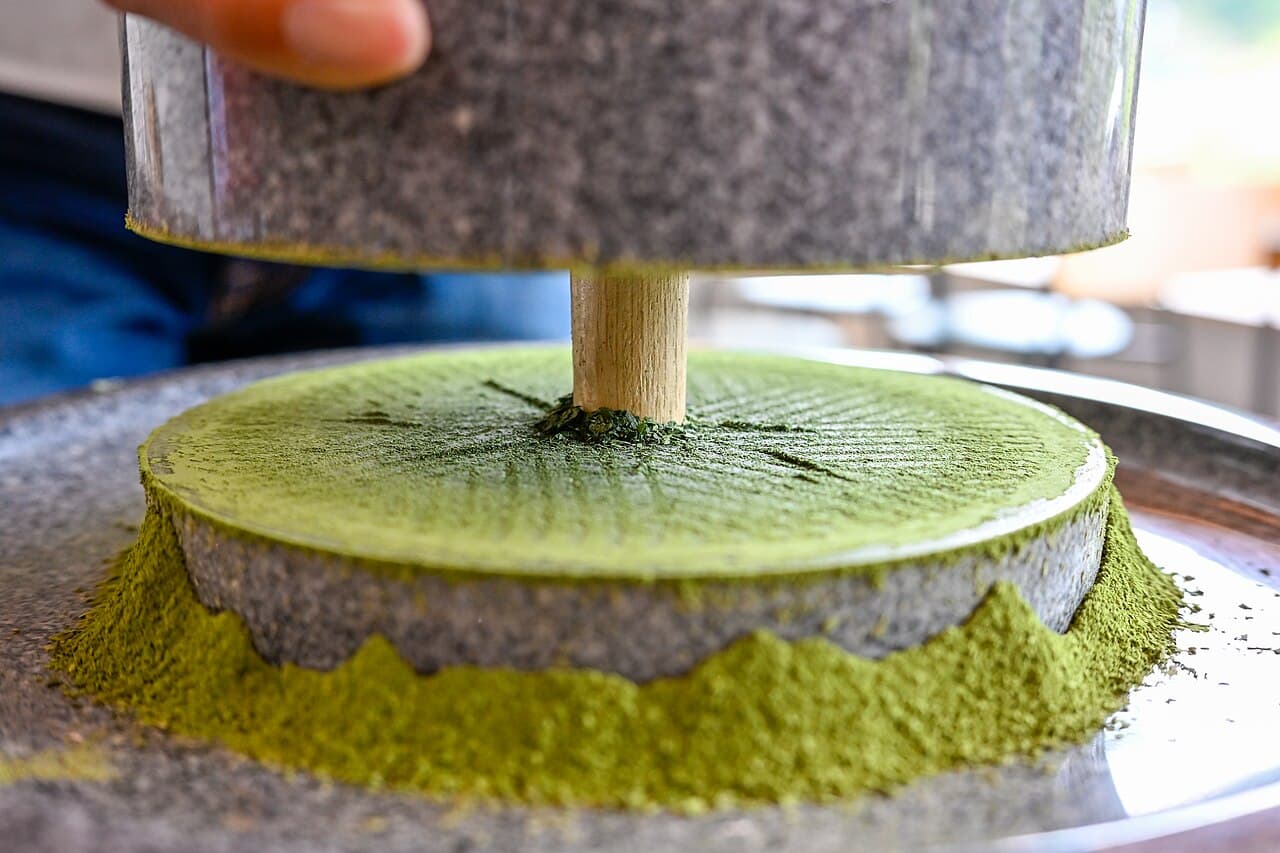
| Stone-ground (usu de hiita) | Yes | MAFF's own tea pages define matcha as tencha ground by stone mill — ask the vendor whether that's how theirs was made |
| Named region (Uji, Nishio, Yame…) | Yes, if named | A specific place is a checkable claim; 'Japan' alone is not |
| Named cultivar (e.g. Samidori, Asahi) | Yes, if named | Cultivar names are checkable, unlike a grade word |
| Price per gram | Yes | Arithmetic — divide price by net weight yourself |
Reading a real label
Put this into practice against two real companies in our Ippodo vs. Marukyu Koyamaen spec comparison: both skip 'ceremonial' on their own product pages entirely, and instead state usucha/koicha suitability, a named blend, and (for Marukyu Koyamaen) the historic Uji growing area. That's the pattern worth copying when you are comparing tins that do use the word: read past 'ceremonial' to the specs sitting next to it.
Sources
FAQ
- Is premium grade better than ceremonial grade?
- There's no fixed hierarchy between the two — each company ranks its own products differently, so 'premium' at one company can sit above or below 'ceremonial' at another.
- Is culinary grade just lower-quality ceremonial grade?
- Not necessarily lower quality — it's usually a coarser grind or later harvest suited to being mixed with milk or sugar, where matcha's more delicate notes would be masked anyway. It's a different intended use, not automatically an inferior tea.
- So how do I actually compare two matcha tins?
- Skip the grade word and compare region, cultivar (if stated), harvest flush, milling method and price per gram — all independently checkable, unlike 'ceremonial' or 'premium.'
This article is for information only, not health or medical advice — we describe tea, not what tea will do for your body. Prices, availability and harvest details change; always check the linked vendor or official page before buying. Outbound links to vendors are plain links: we hold no affiliate accounts and earn nothing if you use them (see /how-we-review).