Reference
Why Is Uji Matcha Famous? The History and Data Behind the Name
The short answer
"Uji matcha" is a historical and geographic reputation, not a single farm or a modern certification — the name covers tea grown across Kyoto Prefecture's Yamashiro region, of which Uji City is the best-known part, not the only source. The fame traces to two things that actually happened there: a 14th/15th-century shogun's patronage that made Uji tea the nationally recognized "real tea" (本茶), and the invention of shading techniques Japan still uses to make tencha (matcha's raw leaf) and gyokuro.
The history, dated
- 1191: Zen priest Eisai brought tea seeds back from China. He gave some to the monk Myōe Shōnin, who first planted them at Kōzan-ji Temple in Toganoo, then distributed seed to Uji and elsewhere.
- 1358–1408: Ashikaga Yoshimitsu, third shogun of the Muromachi shogunate, developed the "Uji Shichimeien" — seven dedicated tea gardens in Uji (Mori, Iwai, Umonji, Kawashimo, Okunoyama, Asahi and Biwa). Only one, Okunoyama-en, is still cultivated today; it's recognized as an Important Cultural Landscape and Japan Heritage site.
- Uji tea subsequently overtook Toganoo tea in both quality and volume and inherited the designation "honcha" (本茶, "real tea"), distinguishing it from tea grown elsewhere.
- 1522–1591: Tea master Sen no Rikyū, who perfected the tea ceremony, is said to have frequented Uji to taste new-picked tea, further cementing its reputation among the ruling and warrior classes.
- 1738: Nagatani Sōen, working in what's now Ujitawara Town, developed the steaming-and-rolling method that became the standard way to process Japanese green tea nationwide — the same basic process used for sencha today.
- Gyokuro is described in Kyoto Prefecture's own account as having originated by accident during the processing of leaf from Uji's shaded (oishita) tea gardens.
The technique: oishita (shaded cultivation)
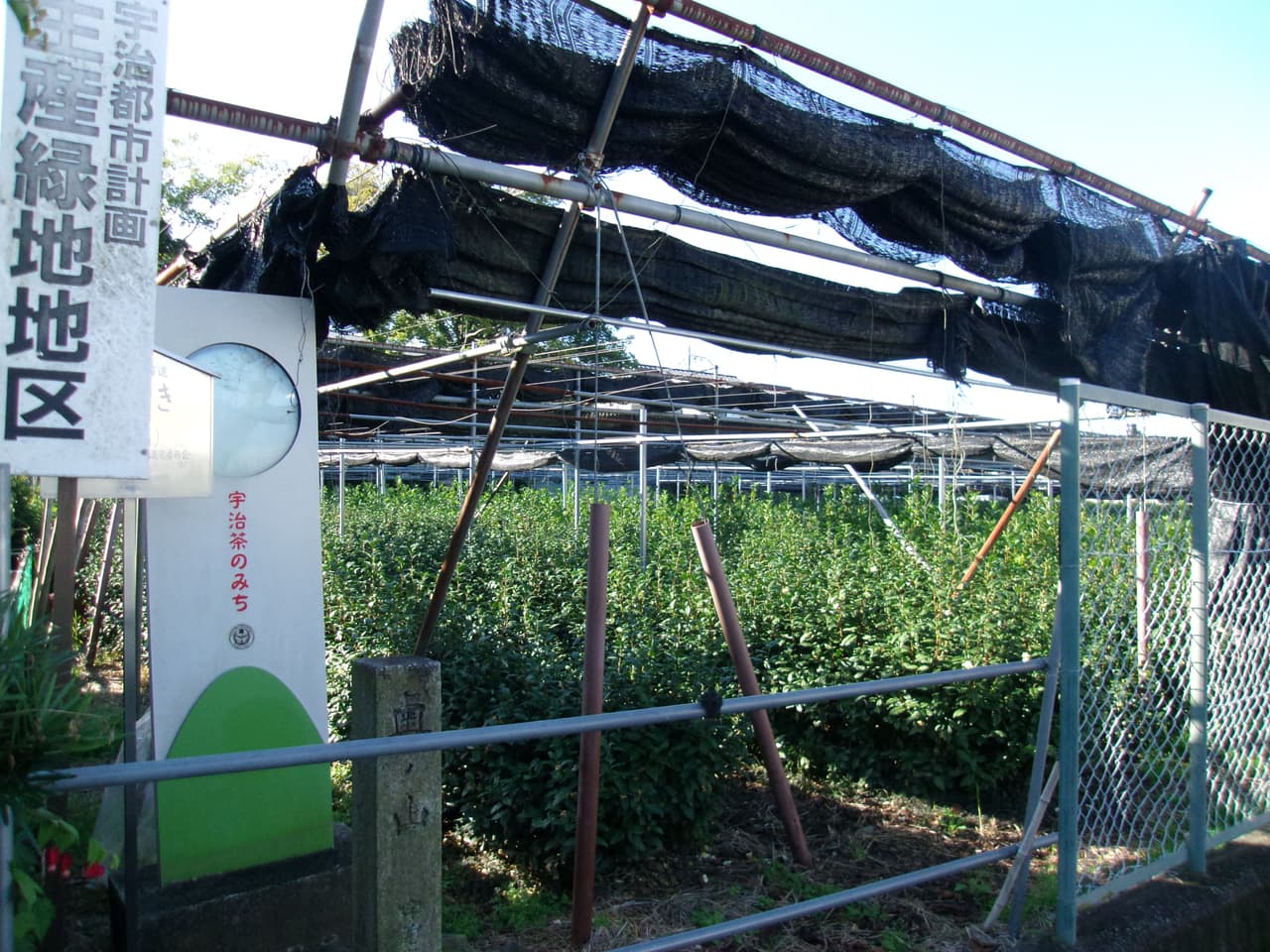
What actually separates Uji-style tea from most others isn't a secret ingredient — it's the oishita method: covering tea fields with reeds, straw or (today) synthetic shading cloth for one to several weeks before harvest. Kyoto Prefecture's own materials describe how this keeps new growth soft and prevents frost damage, producing the mellower, more umami-forward character associated with tencha and gyokuro. This is a genuinely checkable production method, unlike a marketing grade — see our grade decoder for why that distinction matters when you're actually buying.
"Uji tea" is bigger than Uji City
This is the part general encyclopedia entries tend to flatten: Kyoto Prefecture's own materials describe "Uji tea" (宇治茶) as the output of the wider Yamashiro region — Uji City, Joyo City, Ujitawara Town, Wazuka Town, Kizugawa City, Kyotanabe City, Minamiyamashiro Village, Yawata City and Ide Town all grow and process tea under the Uji tea name. Prefecture materials specifically credit Wazuka Town with over 45% of all Uji green tea production and Minamiyamashiro Village with about 27% of Kyoto Prefecture's total tea output — Uji City itself, where the historic gardens and the name originate, is not the volume leader. Within the region, Joyo City is called out as a major tencha-producing center along the Kizu River, and Kyotanabe City is known specifically for gyokuro.
What this means when you're buying
A tin labelled "Uji matcha" is telling you about growing-region reputation and (often) the oishita method — not a specific farm, and not automatically the shading duration or cultivar. Those are separate, checkable facts worth asking for: see our Yabukita cultivar guide for how cultivar is a similarly checkable label detail, and our price-per-gram comparison for how pricing compares in practice.
Sources
FAQ
- Is 'Uji matcha' from a single farm or region?
- Neither exactly — it's a historical growing-region name covering Kyoto Prefecture's wider Yamashiro area, not one farm. Kyoto Prefecture's own materials credit Wazuka Town, not Uji City itself, with the largest share of Uji tea production.
- What actually makes Uji tea distinctive?
- The oishita (shaded) cultivation method — covering fields for one to several weeks before harvest — which Kyoto Prefecture's own history credits with originating there and which remains the basis for tencha (matcha) and gyokuro production.
- Is Uji matcha automatically ceremonial grade?
- No — region and grade are unrelated labels. As we cover in our grade decoder, 'ceremonial grade' has no public definition anywhere in Japan, Uji included; region tells you about growing area and technique, not a quality tier.
This article is for information only, not health or medical advice — we describe tea, not what tea will do for your body. Prices, availability and harvest details change; always check the linked vendor or official page before buying. Some outbound links are affiliate links — they never change what we recommend (see /how-we-review).