
Reference
Yabukita: Japan's Standard Tea Cultivar, Explained
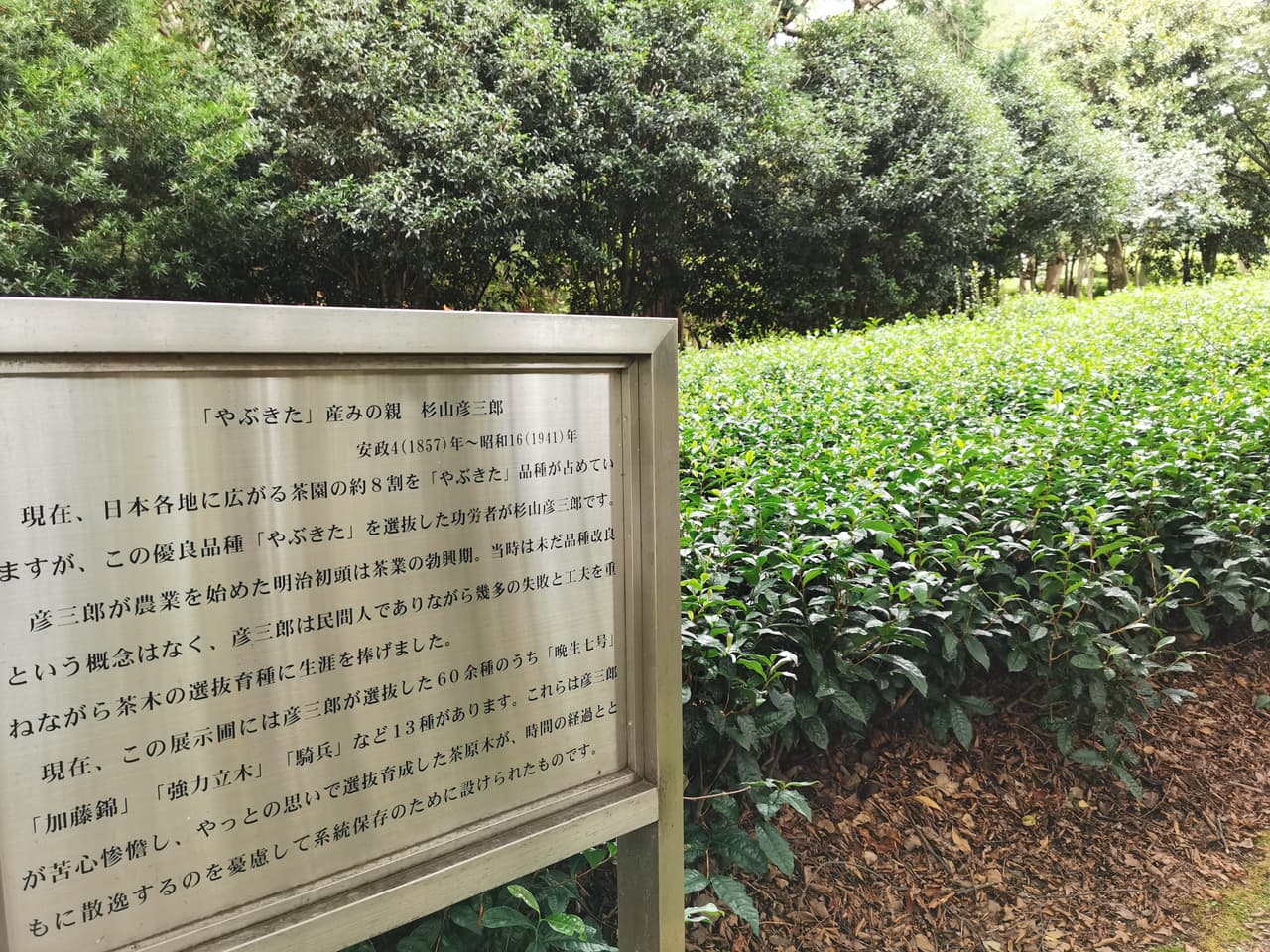
What Yabukita is
Yabukita (やぶきた) is a cultivar — a specific bred variety of the tea plant Camellia sinensis — not a grade, a region or a brand. When a label states a cultivar at all (most don't), "Yabukita" is by far the most common answer, because it's the plant most Japanese tea gardens are actually planted with.
Origin
Tea farmer and breeder Sugiyama Hikosaburō selected the Yabukita plant around 1908 from a tea field he had developed near Tsushima Shrine in what is now Suruga-ku, Shizuoka City — according to the Shizuoka Tea Wholesalers Cooperative's own account, he took cuttings from the north (kita) side of the field, and a companion selection from the south side became "Yabuminami." Shizuoka Prefecture designated Yabukita a recommended cultivar in 1945, and Japan's then Ministry of Agriculture and Forestry registered it nationally in 1953. A memorial tea field marking the original planting site still stands in front of the Shizuoka Prefectural Museum of Art.
How much of Japan's tea is Yabukita
According to the Shizuoka Tea Wholesalers Cooperative's own account, Yabukita covers roughly 80% of Japan's tea-growing area today — by far the largest share held by any single cultivar, though other published estimates for the exact percentage vary somewhat by year and dataset, and several describe the share as gradually declining as growers diversify into newer cultivars bred for specific traits (earlier or later harvest windows, disease resistance, particular shading response). Whichever exact figure you use, no other single cultivar comes close to matching it.
Why one cultivar dominates
Yabukita's traits are agricultural, not flavor marketing: strong frost resistance, adaptability across different soils, reliable and relatively fast growth, and ease of transplanting — qualities that made it a low-risk, high-yield choice for farmers nationwide as it spread out from Shizuoka through the 20th century. It's grown for sencha, matcha (as tencha) and most other Japanese tea styles, in Shizuoka, Kagoshima, Kyoto and elsewhere.
What it means on a label
A stated cultivar — Yabukita or otherwise — is one of the genuinely checkable facts we point to instead of an undefined grade word like "ceremonial" (see our grade decoder). Because Yabukita is the nationwide default, many everyday teas simply don't name it; a vendor naming a different cultivar (Samidori, Okumidori, Gokou and others) is usually signaling something more specific about growing purpose or style — worth reading as a real distinction, and one we factor into our price-per-gram comparison and our pillar on choosing good matcha.
Sources
FAQ
- Is Yabukita a grade of matcha?
- No — it's a cultivar (a specific tea plant variety), unrelated to marketing grade words like 'ceremonial.' A label naming Yabukita tells you what plant the tea came from, not how it was ranked.
- If most Japanese tea is Yabukita, does naming it on a label mean anything?
- Not much by itself, since it's the nationwide default and many teas don't bother stating it. A vendor naming a different cultivar (Samidori, Okumidori, Gokou, etc.) is usually the more informative signal.
- Where is Yabukita grown?
- Nationwide — it originated in Shizuoka around 1908 and spread to essentially every major tea-growing prefecture, including Kagoshima, Kyoto and Mie, because of its reliability across different soils and climates.
This article is for information only, not health or medical advice — we describe tea, not what tea will do for your body. Prices, availability and harvest details change; always check the linked vendor or official page before buying. Some outbound links are affiliate links — they never change what we recommend (see /how-we-review).