Reference
Yame, Fukuoka: The Home of Yame Gyokuro
Yame sits in the hill country of southern Fukuoka Prefecture, on the island of Kyushu — and among Japan's tea-growing districts, none has a longer or more consistent run at the top of the country's National Tea Competition (zenkoku cha hinpyokai) gyokuro rankings.
Geography: river valleys and fog
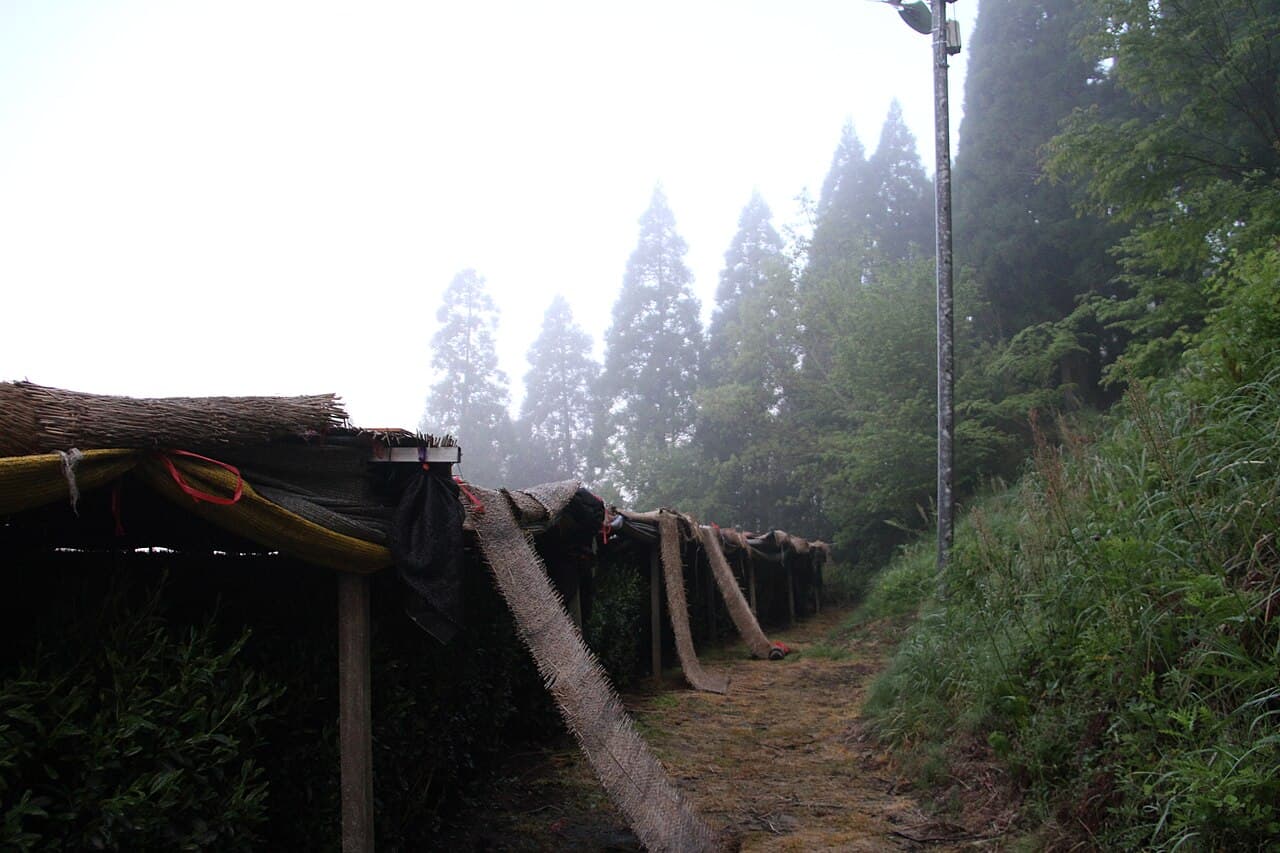
The growing area follows the Yabe and Chikugo river valleys through Yame City and the surrounding hill towns. Annual rainfall runs roughly 1,600–2,400mm, and the terrain produces a sharp swing between warm days and cool nights — conditions that regularly generate morning and river fog over the tea fields during the growing season. Japanese-language references on the district, including Fukuoka's own tea promotion council, describe this fog as a natural, ambient form of shading that layers on top of whatever cloth or straw covering a given field also uses.
The competition record
At Japan's National Tea Competition, gyokuro entries are judged by producer and also scored up to a municipal "regional award" (sanchi-sho, 産地賞). Yame City has won that gyokuro-division regional award every year since 2001. Fukuoka Prefecture's own announcement of the 79th competition's results, released September 1, 2025, put the streak at 25 consecutive years. In the same competition, a Yame City producer, Shintaro Tokunaga, won the Minister of Agriculture, Forestry and Fisheries Award in the gyokuro division for Fukuoka's third year running.
It's worth being precise about what that streak covers: it is specifically a gyokuro-category result. Yame's sencha results in the same 2025 competition were more modest — a third-place finish in the 10kg class from neighboring Hirokawa and a sixth-place finish in the 4kg class from Yame City itself — a reminder that the region's competition dominance is a gyokuro story first, not a blanket claim across every tea type it grows.
Shade cultivation, the straw-mat tradition, and Japan's first tea GI
Gyokuro anywhere in Japan is defined by pre-harvest shading, which today is usually done with black synthetic netting for the final stretch before picking. Yame's traditional style — known as hon-gyokuro (本玉露) — instead lays rice straw and reed matting directly over the bushes by hand, a slower, more labor-intensive method that the region's tea association credits with a distinctive "covering aroma" and a mellower, more concentrated character than net-shaded leaf.
That straw-shaded style also has formal legal recognition. On December 22, 2015, "八女伝統本玉露" (Yame Dento Hon-Gyokuro) was registered as product No. 5 under Japan's Geographical Indication (GI) Act — filed the same day as Kobe beef, Yubari melon, and four other founding GI products. It was the only tea among that first batch of registrations, making it the first Japanese tea to receive GI protection. The registration ties the name to a defined production area and method: straw shading, hand-picking, and natural pruning, practices the registration describes as maintained in the district for more than a century.
Beyond gyokuro
Gyokuro is Yame's specialty and its competition strength, but it isn't the district's only product. Growers in the area also produce sencha, kabusecha (a partially shaded style between sencha and gyokuro), and tencha, the shade-grown leaf that's stone-milled into matcha. By national output, Fukuoka Prefecture is a mid-sized producer rather than the largest: its rough-tea (aracha) harvest of roughly 1,780 tonnes in fiscal 2019 ranked sixth nationally, well behind Shizuoka and Kagoshima. The wider Yame growing area covers an estimated 1,540 hectares, with about 90% of that concentrated immediately around Yame City — a district that trades scale for specialization in shaded tea.
A short history
The district's tea history is conventionally dated to 1423, when a monk named Eirin Shuzui, having returned from a period of training in Ming-dynasty China, gave tea seeds and processing knowledge to a local landowner, Matsuo Tarogoro Kuie, in the Kasahara area of what's now Yame's Kurogi district.
Reading a Yame-cha label
That history matters for how you read a package. "八女茶" (Yame-cha) alone is the broad regional brand — it covers the district's sencha, kabusecha, and matcha-destined tencha as well as its gyokuro, and it doesn't by itself specify the straw-shading method. A package that specifically says "八女伝統本玉露" (Yame Dento Hon-Gyokuro), or that carries the government's GI mark, is making the narrower, legally defined claim: grown within the registered area and shaded with straw by hand, under rules registered with the agriculture ministry in 2015.
If you've picked up a bag of Yame gyokuro, our brewing guide covers the water temperature and steep times suited to the style: how to brew gyokuro. And if you're comparing Japan's best-known shaded-tea regions, our companion listing covers Kyoto's district on the other end of that map: why Uji matcha is famous.
Sources
FAQ
- What makes Yame gyokuro different from gyokuro grown elsewhere in Japan?
- Two verifiable things: shading method and competition record. Most Japanese gyokuro is shaded with synthetic netting, while Yame's traditional hon-gyokuro style still uses hand-laid rice straw and reed matting — a method with its own government geographical-indication (GI) registration since December 2015. Yame City has also won the National Tea Competition's gyokuro regional award every year since 2001, 25 consecutive years as of the 79th competition in 2025.
- Is all Yame tea gyokuro?
- No. Yame also grows sencha, kabusecha, and tencha, the shade-grown leaf that's milled into matcha. Gyokuro is the region's specialty and the category where it wins nationally, not its only product.
- Does a bag labeled "八女茶" (Yame-cha) guarantee it was shaded with straw the traditional way?
- No. "八女茶" is the district's broad regional brand name, covering all tea grown there regardless of shading method. The straw-shaded, hand-picked style has its own narrower, legally registered name — "八女伝統本玉露" (Yame Dento Hon-Gyokuro) — and carries the government's GI mark when produced under those registered rules.
This article is for information only, not health or medical advice — we describe tea, not what tea will do for your body. Prices, availability and harvest details change; always check the linked vendor or official page before buying. Outbound links to vendors are plain links: we hold no affiliate accounts and earn nothing if you use them (see /how-we-review).