Guide
How to Brew Gyokuro: Water Temperature and Steep Time, Explained
The short answer
Gyokuro (玉露) wants water at roughly 50–60°C, steeped for 90–150 seconds — cooler and slower than almost any other tea most people drink. That's the same range our own brew timer uses, and it's not a house style choice: it comes straight out of how the leaf is grown and what's inside it. Sencha (煎茶), by comparison, is usually brewed closer to 70–80°C for 60–90 seconds — see the timer for both side by side.
Why gyokuro wants water this much cooler
The short version: gyokuro leaf is grown to be low in the compounds that need hot water to dissolve, and rich in the ones that don't.
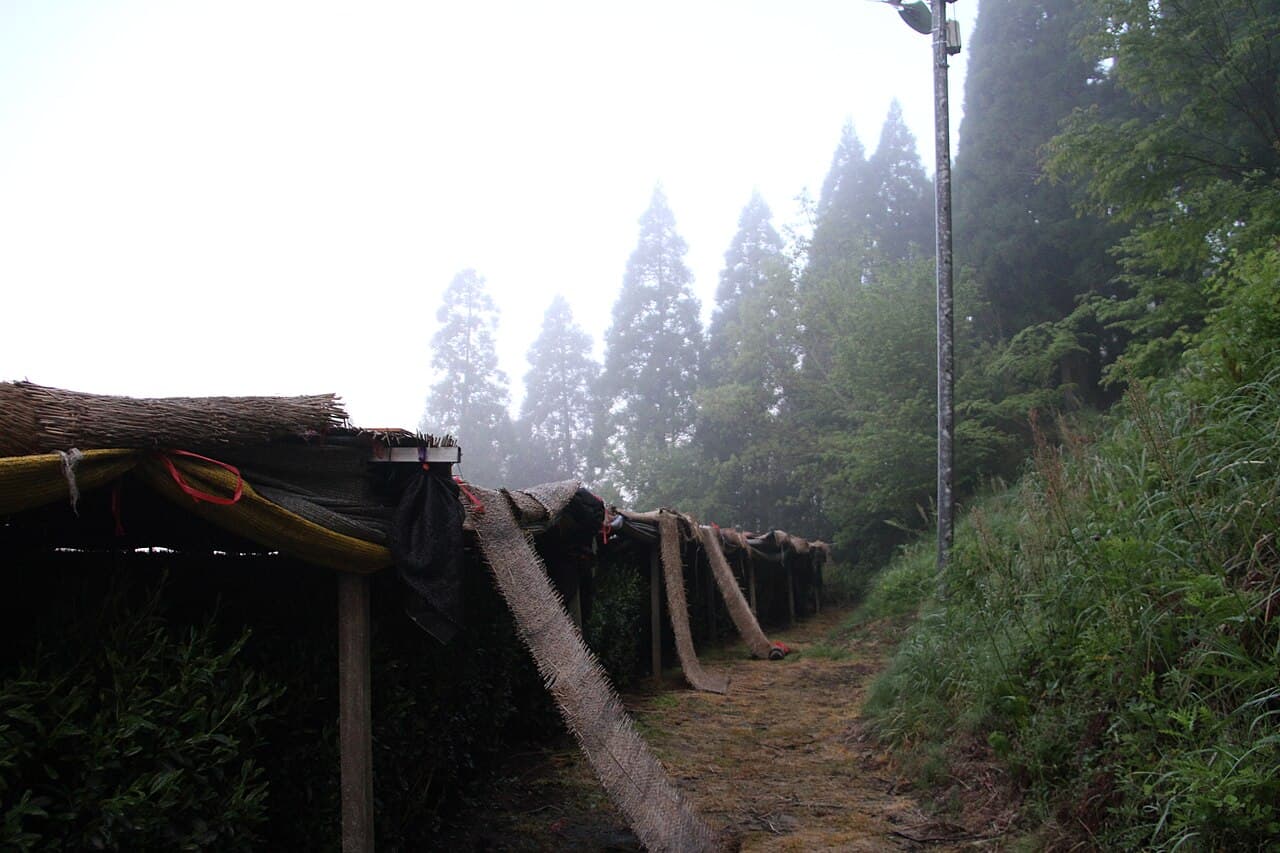
For roughly three weeks before harvest, gyokuro fields are covered to block direct sunlight — the same oishita (shaded) method behind Uji's reputation, which we go through in more depth in why Uji matcha became famous. Blocking light suppresses the plant's usual conversion of theanine, a savory amino acid, into catechins, the compounds behind bitterness and astringency. JA Fukuoka Yame's growing guide describes this directly: shading keeps theanine from converting into catechin, which is what concentrates gyokuro's sweetness and softens its bitterness (JA Fukuoka Yame).
That leaf chemistry is exactly why the brewing temperature matters so much. Japan's Ministry of Agriculture, Forestry and Fisheries (MAFF) publishes an official tea-brewing manual, and its gyokuro section is blunt about the mechanism: compared with other tea types, gyokuro carries somewhat less tannin but a good amount of caffeine — one of the main sources of bitterness in the cup — so the technique is to use low-temperature water, in which amino acids dissolve readily but caffeine and other bitter, astringent compounds resist dissolving (MAFF, Tea Brewing Manual, gyokuro section). Kyoto Prefecture's own tea research institute gives the same range in practice — water cooled to 50–60°C, steeped for about 2.5 minutes — precisely because it lets the umami compounds extract fully without dragging bitterness along with them (Kyoto Prefecture Tea Research Institute). The long steep time isn't there to make up for a weak leaf — it's there because cool water needs longer to draw out everything gyokuro has to offer, and at that temperature, that's a safe thing to do.
How much leaf and water
MAFF's manual gives gyokuro a distinctly small scale: about 2–3g of leaf per person, with each pour assumed at roughly 10ml — a mouthful, not a cup — or about 10g of leaf for three people as a standard measure (MAFF, Tea Brewing Manual). That's a similar weight of leaf to what the same manual recommends for standard sencha, but for a small fraction of the water — sencha is figured at 100ml per person. Gyokuro isn't diluted the way sencha is; it's concentrated on purpose.
Small cups, on purpose
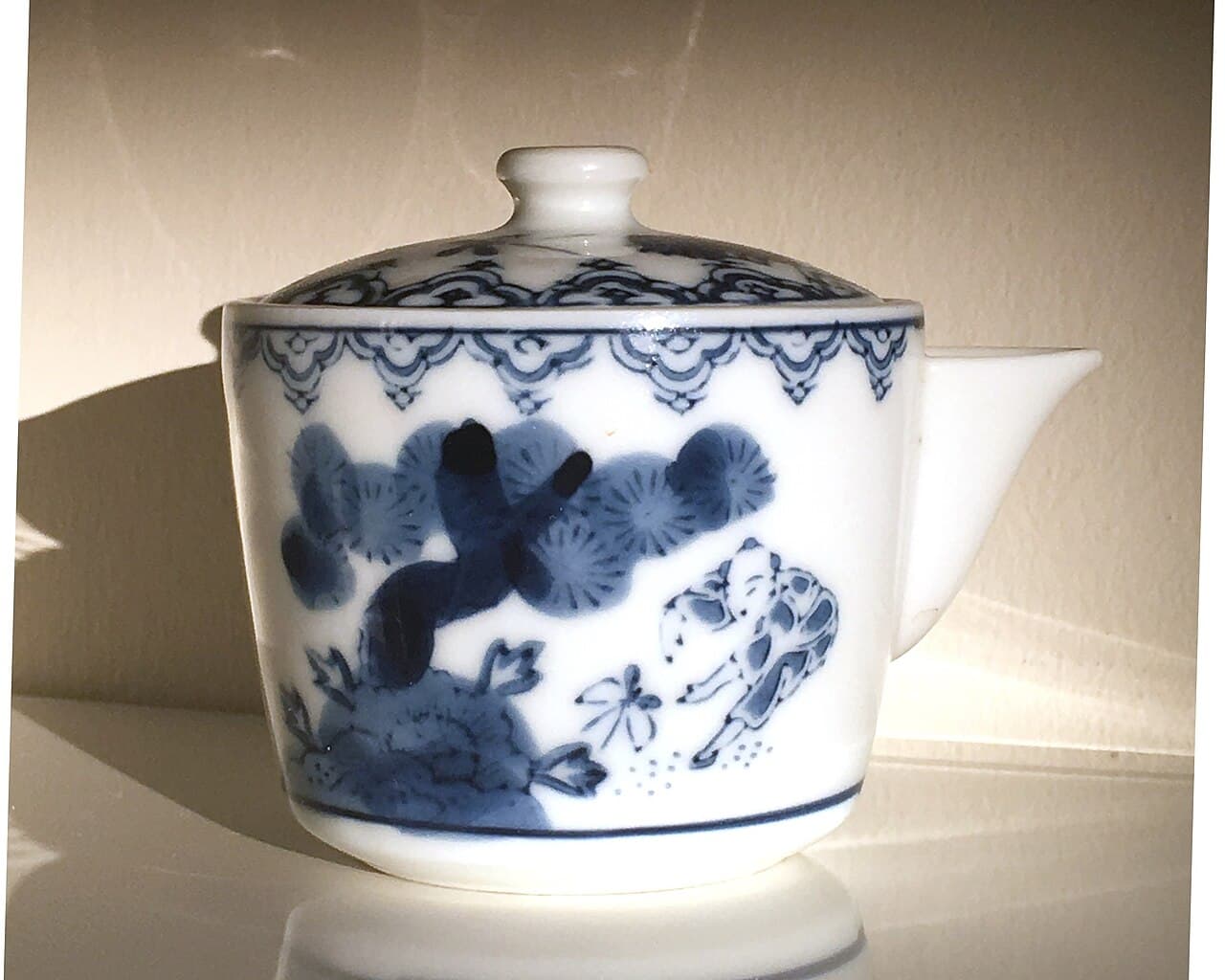
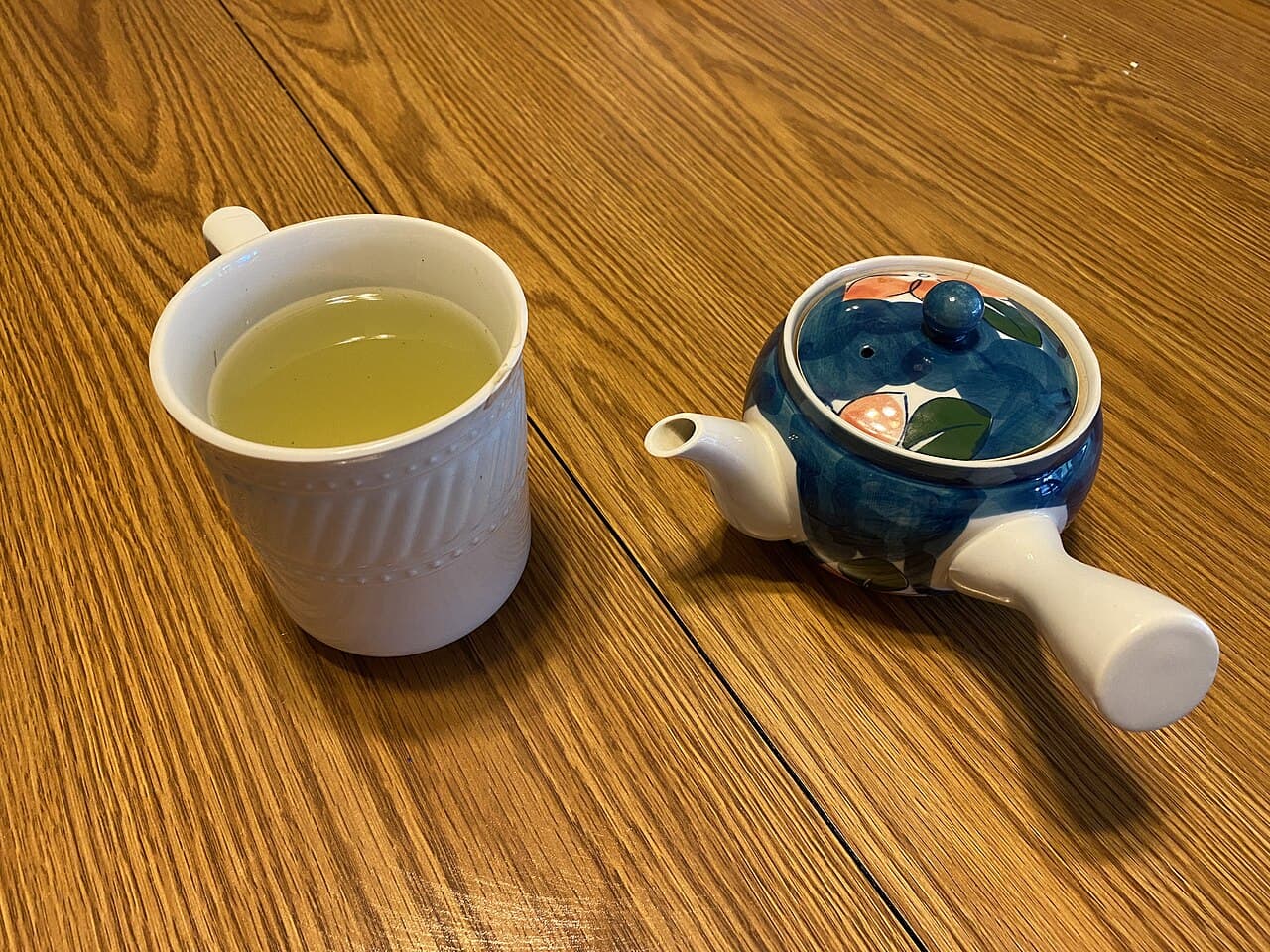
That concentration shows up in the teaware. MAFF's manual lists a 90ml kyusu (急須, side-handle teapot) paired with "extra-small" cups holding about 40ml for gyokuro — against a 250ml kyusu and 100ml cups for good-quality sencha. The cups aren't a stylistic flourish; they're sized for how little liquid actually gets poured. The same manual notes gyokuro is traditionally drunk by holding it on the tongue for a moment rather than swallowing it straight down, which only really works with a small, concentrated sip.
Pouring itself follows a specific pattern, called mawashi-sosogi (廻し注ぎ, rotating pour): rather than filling one cup at a time, you pour a little into each cup in turn, then reverse and top each one up again, so every cup ends up the same strength. The kyusu should be emptied completely — MAFF's phrase is "to the last drop" — because any liquid left sitting on the leaves keeps steeping and throws off the next infusion.
Second (and third) infusions
Gyokuro leaf isn't spent after one pour. MAFF's manual has the second infusion brewed slightly hotter than the first, since the compounds left in the leaf after one steep dissolve more readily, and for about half the time — roughly a minute rather than 150 seconds. Many drinkers take it further with a third infusion, pushing the water hotter and the time shorter again, following the same logic: each round pulls out what's left with less coaxing than the one before it.
FAQ
Why is gyokuro brewed so much cooler than sencha? Weeks of shading before harvest hold back the leaf's conversion of theanine into catechin, so gyokuro leaf carries relatively more of the compounds that dissolve well in cool water (theanine, for umami) and fewer that need heat to extract cleanly (catechin, caffeine, for bitterness). Brewing hot would pull out more of the latter than the leaf is built for.
How much gyokuro leaf do I actually need for one cup? Japan's Ministry of Agriculture's own manual figures about 2–3g per person, poured in a small amount — around 10ml per serving — rather than a full teacup. For three people, about 10g of leaf is a standard measure.
Can I brew gyokuro in an ordinary sencha teapot and cups? You can — nothing about the leaf requires special teaware — but a large kyusu and full-size cups will spread a small amount of concentrated liquid thin. The traditional pairing is a small kyusu (around 90ml) with very small cups (around 40ml) precisely because gyokuro is meant to be sipped in small amounts, not filled to the brim.
Sources
FAQ
- Why is gyokuro brewed so much cooler than sencha?
- Weeks of shading before harvest hold back the leaf's conversion of theanine into catechin, so gyokuro leaf carries relatively more of the compounds that dissolve well in cool water (theanine, for umami) and fewer that need heat to extract cleanly (catechin and caffeine, for bitterness). Brewing hot would pull out more bitterness than the leaf is built for.
- How much gyokuro leaf do I actually need for one cup?
- Japan's Ministry of Agriculture's own brewing manual figures about 2–3g per person, poured in a small amount — around 10ml per serving — rather than a full teacup. For three people, about 10g of leaf is the standard measure.
- Can I brew gyokuro in an ordinary sencha teapot and cups?
- You can — nothing about the leaf requires special teaware — but a large kyusu and full-size cups will spread a small amount of concentrated liquid thin. The traditional pairing is a small kyusu (around 90ml) with very small cups (around 40ml), sized for a tea that's meant to be sipped in small amounts, not filled to the brim.
This article is for information only, not health or medical advice — we describe tea, not what tea will do for your body. Prices, availability and harvest details change; always check the linked vendor or official page before buying. Outbound links to vendors are plain links: we hold no affiliate accounts and earn nothing if you use them (see /how-we-review).