Guide
Cold-Brew Japanese Green Tea: How Mizudashi Works (and Which Teas Suit It)
The short answer
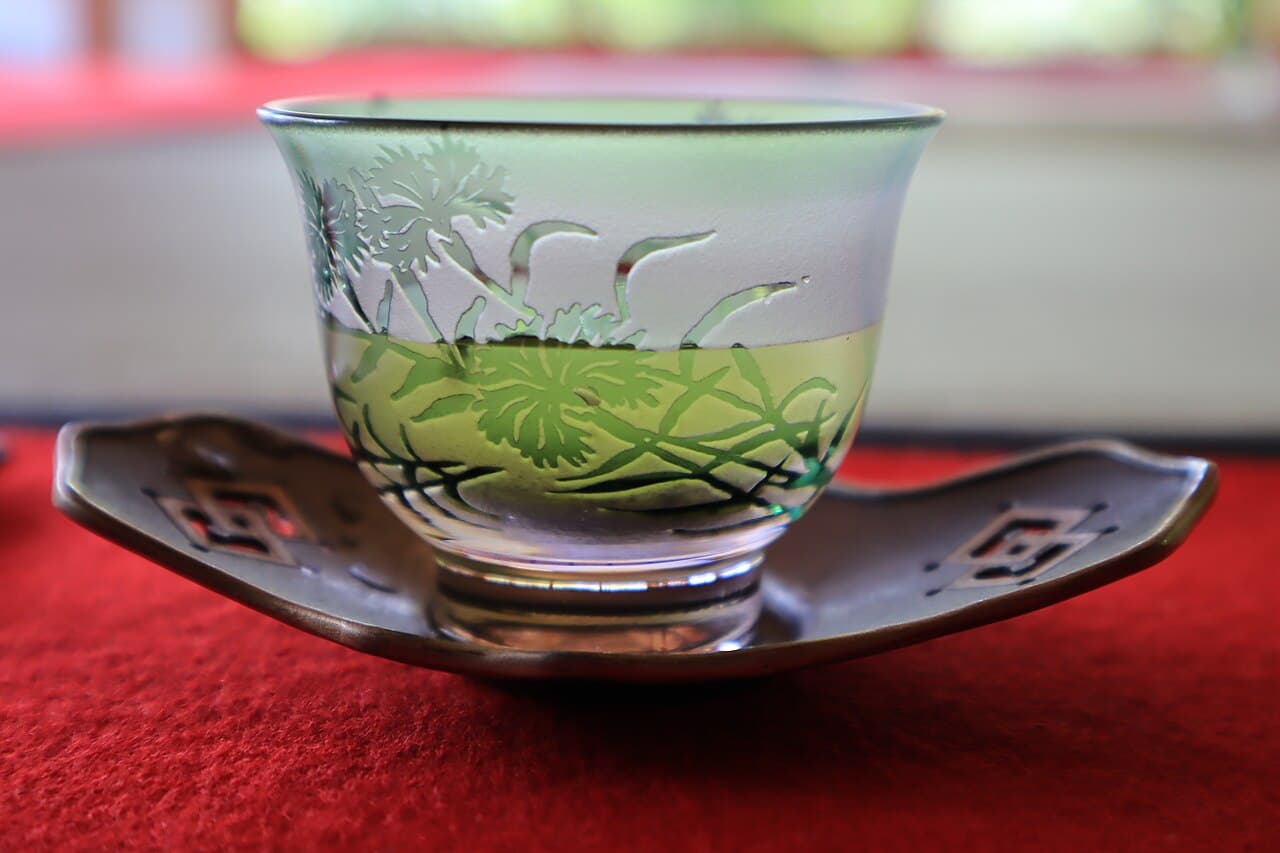
Mizudashi (水出し, "water-extracted") is Japan's cold-steep method for green tea: cold or room-temperature water, tea leaves, and a wait — usually a few hours in the refrigerator rather than the minute or two of a hot cup. The wait is doing chemical work, not just chilling. Cold water pulls out the amino acids behind tea's sweetness and umami about as readily as hot water does, while the compounds behind bitterness and astringency dissolve far more reluctantly. The result tastes rounder and sweeter than the same leaf brewed hot — which is why the method suits Japan's highest-umami leaves, gyokuro and high-grade sencha, especially well.
Why cold water changes the taste, not just the temperature
Hot and cold water don't pull the same things out of a tea leaf at the same rate. Japan's Ministry of Agriculture, Forestry and Fisheries has published its own comparison of the two: at around 10°C — roughly refrigerator temperature — caffeine extracts to about half of what a hot brew pulls out, and EGCG — the catechin the same MAFF comparison ties to astringency, alongside caffeine for bitterness — drops to roughly a fifth. Theanine, the umami amino acid, and EGC, a milder catechin, extract to levels close to what hot water produces. Chill the water further, toward ice-water temperature, and caffeine extraction drops even more.
A separate write-up from the Uji-based retailer Fujiya Chaho describes the same pattern from the angle of time rather than temperature: holding tea at around 4°C for eight to twelve hours draws out more total catechin overall, but skews it heavily toward EGC over EGCG — in their figures, EGC ends up extracted at more than double the ratio of EGCG. Push the temperature up, they note, and the balance tips back toward the sharper-tasting compounds. None of this makes cold-brewed tea objectively "better" — it's a different extraction, and it happens to favor sweetness over bite.
The method, with a real range rather than one number
There is no single official steeping time, because the right one depends on how much you're making and how strong you want it — and real vendor recipes genuinely disagree, which is useful information in itself. Kyoto's Ippodo Tea, for a full pitcher, calls for 20g of leaf per litre of cold water and 3 to 10 hours in the refrigerator, noting that a full overnight steep is fine. Kyoto's Fukujuen recommends the fridge over the counter and a shorter 1 to 2 hours. Shizuoka's Satoen gives 2 to 4 hours as its standard, with overnight (roughly 8 hours) also acceptable, at a ratio of 5 to 8g of leaf per 500ml of water, or 10 to 15g per litre for a stronger pitcher. Treat the short end of that range as a lighter, quicker cup and the long end as a fuller, sweeter one — and pull the leaves out once it's steeped, since every one of these sources agrees that leaving them in past that point starts to develop off-flavors rather than more sweetness.
Ippodo also sells a much quicker version built specifically around gyokuro: 10g of leaf in 210ml of cold water, ready in about 15 minutes — a fraction of the pitcher method's multi-hour fridge wait, and proof that "cold brew" doesn't always mean an overnight project.
Which teas actually suit this
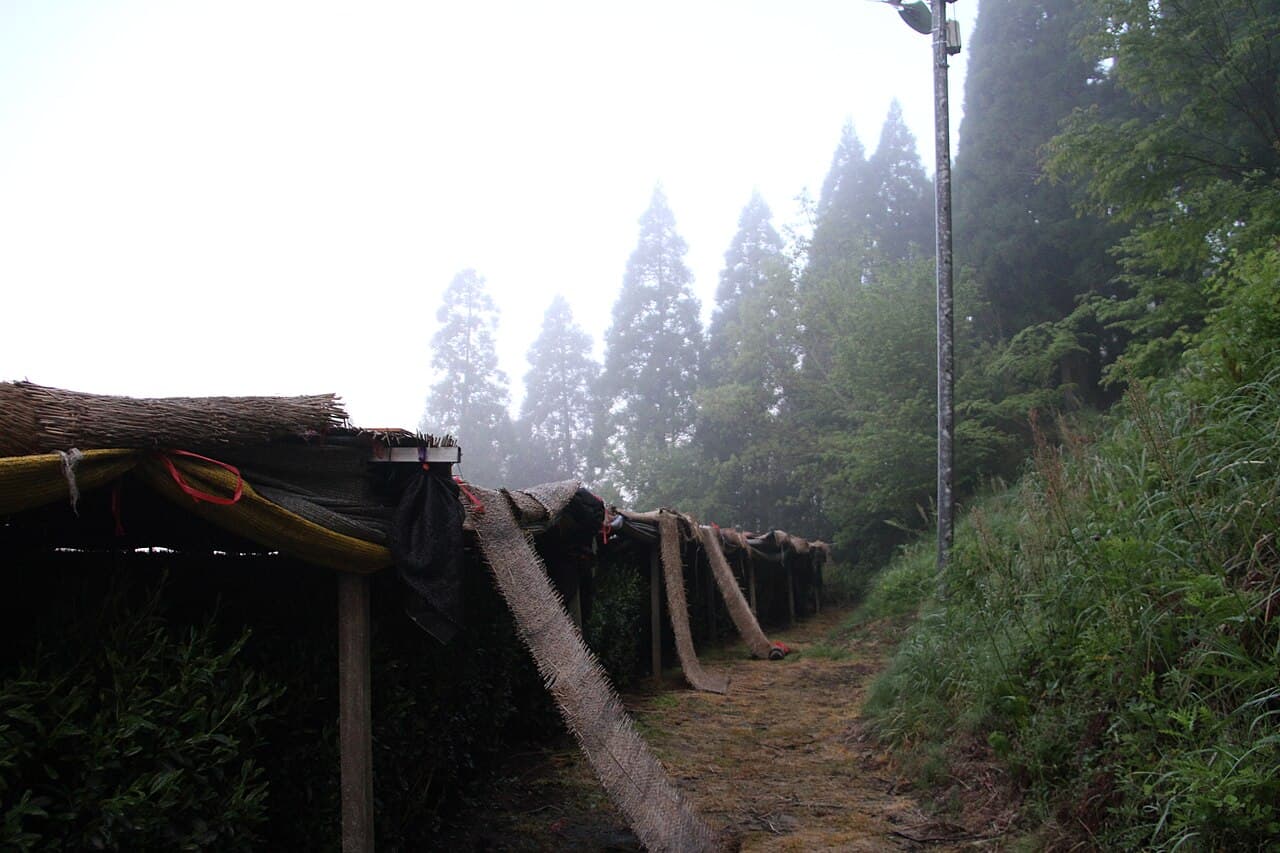
Gyokuro is the clearest case. It's grown under shade for one to several weeks before harvest specifically to build up theanine and suppress the compounds that make tea taste sharp — the same shading, done differently and for longer, is also what makes tencha, matcha's raw leaf (see our guide to Uji's shading method). Since cold water already favors theanine over catechins, brewing an already-shaded, already-umami-forward leaf in cold water compounds the effect rather than fighting it. Ippodo publishes a dedicated recipe just for cold-brewed gyokuro, distinct from its general pitcher method for gyokuro/sencha/bancha together.
High-grade sencha, particularly early-harvest or shade-finished leaf, works for the same reason on a smaller scale: more theanine to show off, a cleaner cold-water result. Fukujuen's own side-by-side comparison frames the difference as character rather than quality — their cold-brewed sencha comes out clean enough to drink by the glass, suited to a hot afternoon, while their cold-brewed gyokuro is more concentrated, with flavor that lingers longer on the palate. A basic, lower-grade sencha or a bancha will still turn out drinkable cold; it will just be less rewarding, because there is simply less umami in the leaf for cold water to bring forward. (Our rundown of Japan's green tea types is a place to start if you're not sure where a given tea sits on that spectrum.) Matcha is a separate case entirely: because you whisk the whole ground leaf into the water rather than steeping and removing it, it isn't brewed this way at all — see how to make matcha for that method instead.
Research from Japan's National Agriculture and Food Research Organization adds a processing-level detail. Comparing steamed sencha against pan-fired kamairicha made from the same Yabukita leaf, researchers found the steamed leaf released its catechins into cold water faster in the first two to six hours, because steaming opens the leaf's structure more than pan-firing does; the two styles converge by the 24-hour mark. It's a reminder that how a leaf was processed, not only its grade, affects how it behaves in cold water.
CHANOMA's cold-brew summer
On this site we mark the months from roughly June through August as cold-brew summer — the stretch when a shaded, umami-heavy leaf genuinely makes more sense in a cold glass than a hot cup. It isn't a sale event or a countdown; it's simply when the method and the tea line up.
FAQ
How long should Japanese green tea steep in a cold brew? There's no single official number. Real vendor recipes range from about 1 to 2 hours in the refrigerator for a quick pitcher up to overnight (roughly 8 to 10 hours) for a fuller one, with 2 to 4 hours the most commonly cited default. Longer, colder steeps — around 4°C for 8 to 12 hours — are aimed at pulling out more total catechin rather than more flavor, so extra time isn't automatically a stronger-tasting cup.
Why does cold-brewed Japanese tea taste less bitter? Because the compounds behind bitterness and astringency — caffeine and the catechin EGCG — dissolve much less readily in cold water than in hot. Japan's agriculture ministry has measured roughly half the caffeine and about a fifth of the EGCG extracting at refrigerator temperature compared with a hot brew, while the umami amino acid theanine extracts at close to the same level either way.
Which Japanese tea is best for cold brewing? Gyokuro and high-grade, shade-grown sencha, because both are cultivated to be high in theanine relative to catechins — exactly the balance cold water favors. A basic sencha or bancha will still turn out drinkable cold, just with less of the sweetness that makes the method worth doing in the first place.
Sources
FAQ
- How long should Japanese green tea steep in a cold brew?
- There's no single official number. Real vendor recipes range from about 1 to 2 hours in the refrigerator for a quick pitcher up to overnight (roughly 8 to 10 hours) for a fuller one, with 2 to 4 hours the most commonly cited default. Longer, colder steeps — around 4°C for 8 to 12 hours — are aimed at pulling out more total catechin rather than more flavor, so extra time isn't automatically a stronger-tasting cup.
- Why does cold-brewed Japanese tea taste less bitter?
- Because the compounds behind bitterness and astringency — caffeine and the catechin EGCG — dissolve much less readily in cold water than in hot. Japan's agriculture ministry has measured roughly half the caffeine and about a fifth of the EGCG extracting at refrigerator temperature compared with a hot brew, while the umami amino acid theanine extracts at close to the same level either way.
- Which Japanese tea is best for cold brewing?
- Gyokuro and high-grade, shade-grown sencha, because both are cultivated to be high in theanine relative to catechins — exactly the balance cold water favors. A basic sencha or bancha will still turn out drinkable cold, just with less of the sweetness that makes the method worth doing in the first place.
This article is for information only, not health or medical advice — we describe tea, not what tea will do for your body. Prices, availability and harvest details change; always check the linked vendor or official page before buying. Outbound links to vendors are plain links: we hold no affiliate accounts and earn nothing if you use them (see /how-we-review).