Guide
What Is Shincha? Japan's First-Flush Tea, Explained
The first tea of the year
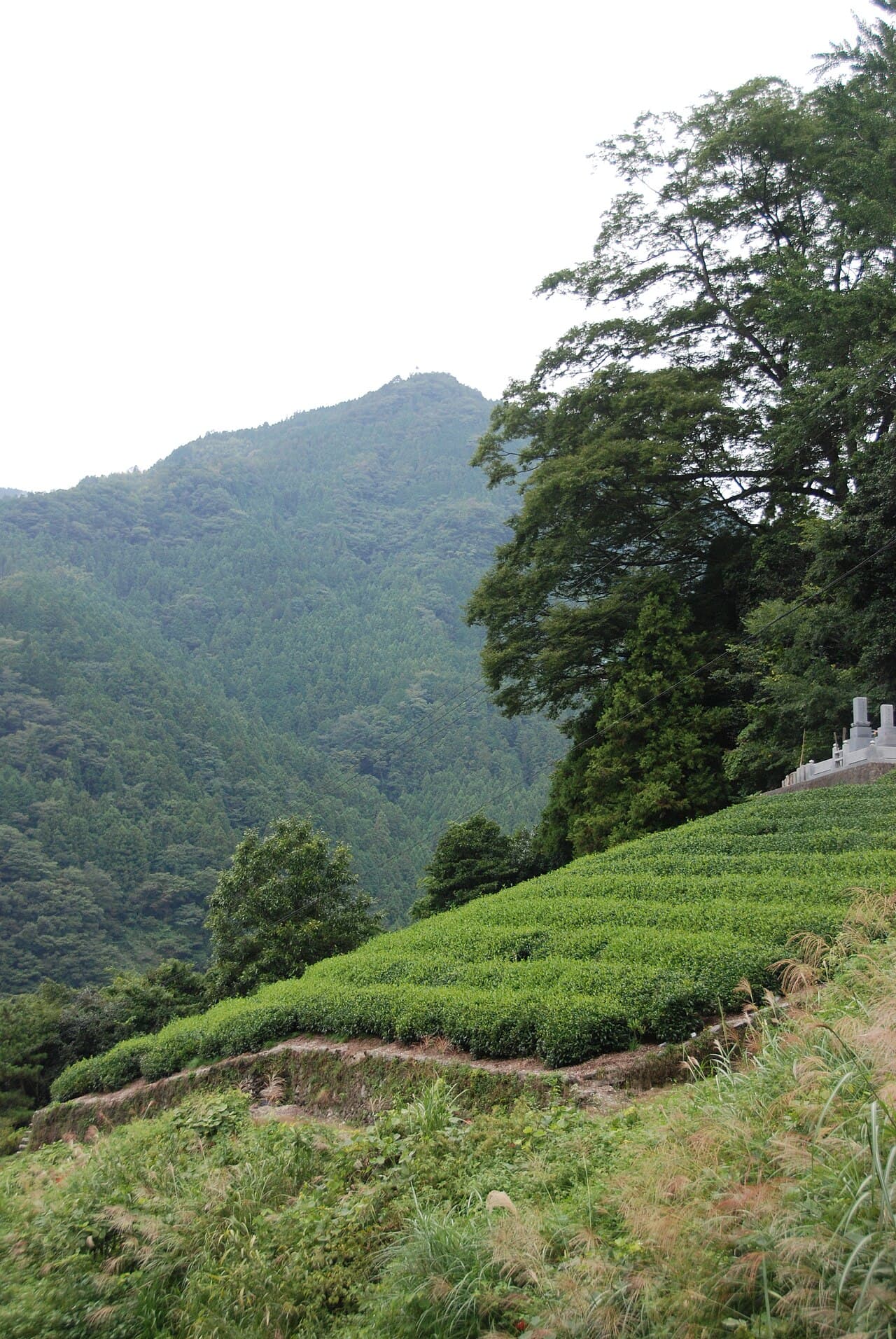
Shincha (新茶, literally "new tea") is what Japanese tea shops call the season's first-picked leaf — the earliest sencha of the year, made from each bush's first flush of spring growth. It's functionally the same harvest as ichibancha (一番茶, "first tea"): the two words describe the same picking from two angles. Ichibancha is the agronomic and statistical term used in production data; shincha is the retail term for that same leaf once it's finished and sold fresh, in the weeks right after picking. Almost all shincha is processed sencha-style — steamed, rolled, and dried unshaded — though shade-grown material for gyokuro and matcha's raw leaf, tencha, is also picked during this same early-season window.
Why the winter matters
A tea bush doesn't grow through the coldest months. Over winter it accumulates amino acids — chiefly theanine — in its roots, which then move up into the new leaves as spring growth begins. Kyoto Prefecture's Tea Research Institute (茶業研究所), which studies tea-cultivation chemistry, describes the mechanism directly: theanine is synthesized in the root and stored in the leaf, and once that leaf is exposed to sunlight, some of the theanine converts into catechin — the class of compounds behind tea's astringency (Kyoto Prefecture, "About Theanine").
Leaf picked early in the season has had less time under strong spring sun for that conversion to run its course. That's the commonly cited horticultural reasoning behind shincha's reputation: a comparatively higher ratio of theanine to catechin, which growers and shops describe as giving the tea a rounder, less astringent character than leaf picked later in the same season. Shaded cultivation — used for gyokuro and matcha's tencha — pushes the same mechanism further on purpose, by blocking sunlight outright before picking. This is a description of taste chemistry as growers and researchers explain it, not a claim about any effect on the body.
When picking starts, region by region
Tea picking begins in Japan's warmest tea country and moves north as spring advances. A regional breakdown published by Kagoshima tea producer Furuichi Seicha lays out the rough order: Kyushu, including Kagoshima, picks first, generally from early April into mid-May; Shizuoka and the rest of the Chubu region follow, from late April into early May; and Uji in Kyoto Prefecture and the Kanto region's Sayama tea (Saitama) typically run from early into late May (Furuichi Seicha, regional shincha timing).
Treat those windows as a guideline, not a fixed calendar — they shift every year with the weather. 2026 was an early year in Kagoshima: the prefecture's opening ichibancha trade took place on April 6, 2026, three days earlier than the previous year, at an average price of ¥6,573 per kilogram (up ¥2,436 from the year before); the day's single highest-priced lot, ¥30,000/kg, was the highest such peak since 1989, according to the Minami-Nippon Shimbun's report on that day's auction results (373news.com). That single date is a snapshot of one prefecture's one opening trade in one year, not an annual constant; use it as an example of the pattern, not a rule to plan around.
There's also a traditional marker that doesn't depend on any single year's weather: hachijuhachiya (八十八夜), the 88th day counted from risshun (立春, the traditional calendar start of spring), which falls around May 1st or 2nd most years. It has long served as an approximate seasonal cue for tea picking, even though picking in the earliest regions is well underway by then (八十八夜, Japanese Wikipedia).
Japan's Ministry of Agriculture, Forestry and Fisheries (MAFF) tracks ichibancha production by prefecture each year. Its report on the 2025 crop shows Kagoshima and Shizuoka as the two largest producers by volume, with picking-area and yield figures broken out by prefecture (MAFF, 令和7年産一番茶 report).
After the first flush
Ichibancha isn't the only harvest of the year. Most tea fields are picked again roughly 45–50 days after the first flush (nibancha, second tea), and again 35–40 days after that (sanbancha, third tea), according to production guidance published by Ocha.tv, a Japanese tea-industry reference portal (Ocha.tv, tea picking). Leaf from these later flushes has had more cumulative sun exposure by the time it's picked — the same chemistry described above, running further along — which is part of why shincha is treated as its own category rather than simply "sencha, but first."
Buying shincha vs. reading this year's market
This guide covers what shincha is, and why growers and researchers describe it the way they do, in any given year. Whether a particular year's shincha is unusually scarce or expensive is a separate, time-bound question — for this year's specific market conditions, see Is There a Matcha Shortage in 2026?, which walks through MAFF's 2026 trade data and the Uji tencha auction results directly. If you're comparing prices across vendors once you're actually shopping, the price-per-gram guide covers how to read a vendor's own published figures rather than estimating them yourself.
Sources
- Kyoto Prefecture Tea Research Institute — About Theanine (テアニンについて)
- MAFF — Reiwa 7 (2025) First-Flush Tea: Picking Area, Fresh-Leaf Harvest and Finished-Tea Production by Main Prefecture
- Furuichi Seicha (Kagoshima) — When Is Shincha Season? Regional Timing by Area
- Ocha.tv — How Tea Is Made: Picking (お茶の摘採)
- Minami-Nippon Shimbun (373news.com) — 2026 Shincha Opens at Record ¥30,000/kg High, Kagoshima's Earliest-in-Japan First Trade
- 八十八夜 (Hachijuhachiya) — Japanese Wikipedia
FAQ
- Is shincha the same as sencha?
- Shincha is a subset of sencha: specifically the first-picked (ichibancha) sencha of the year, sold fresh in the weeks after that harvest. Sencha from the second or third flush picked later the same year is processed the same way but isn't called shincha.
- When does shincha season start in Japan?
- Picking typically begins in Kagoshima and other Kyushu tea regions in early April, then moves north through Shizuoka in late April and into Uji (Kyoto) and Saitama's Sayama tea by May. Exact dates shift year to year with the weather — in 2026, Kagoshima's opening trade was April 6.
- Why is shincha described as sweeter than later-season tea?
- Growers attribute it to the leaf's theanine-to-catechin ratio: theanine accumulated in the plant over winter converts toward catechin as leaf spends more time in spring sunlight, so earlier-picked leaf is described as retaining comparatively more theanine relative to catechin than leaf picked later from the same bush. This describes taste chemistry as growers and researchers explain it, not a health effect.
- What's the difference between shincha and ichibancha?
- They describe the same harvest from two angles. Ichibancha (一番茶) is the agronomic and statistical term for the year's first tea flush, used in production reporting. Shincha (新茶) is the retail term for that same leaf once it's processed and sold fresh.
This article is for information only, not health or medical advice — we describe tea, not what tea will do for your body. Prices, availability and harvest details change; always check the linked vendor or official page before buying. Outbound links to vendors are plain links: we hold no affiliate accounts and earn nothing if you use them (see /how-we-review).