Guide
How to Use a Kyusu Teapot: Parts, Strainers, and the Right Way to Pour
What a kyusu is
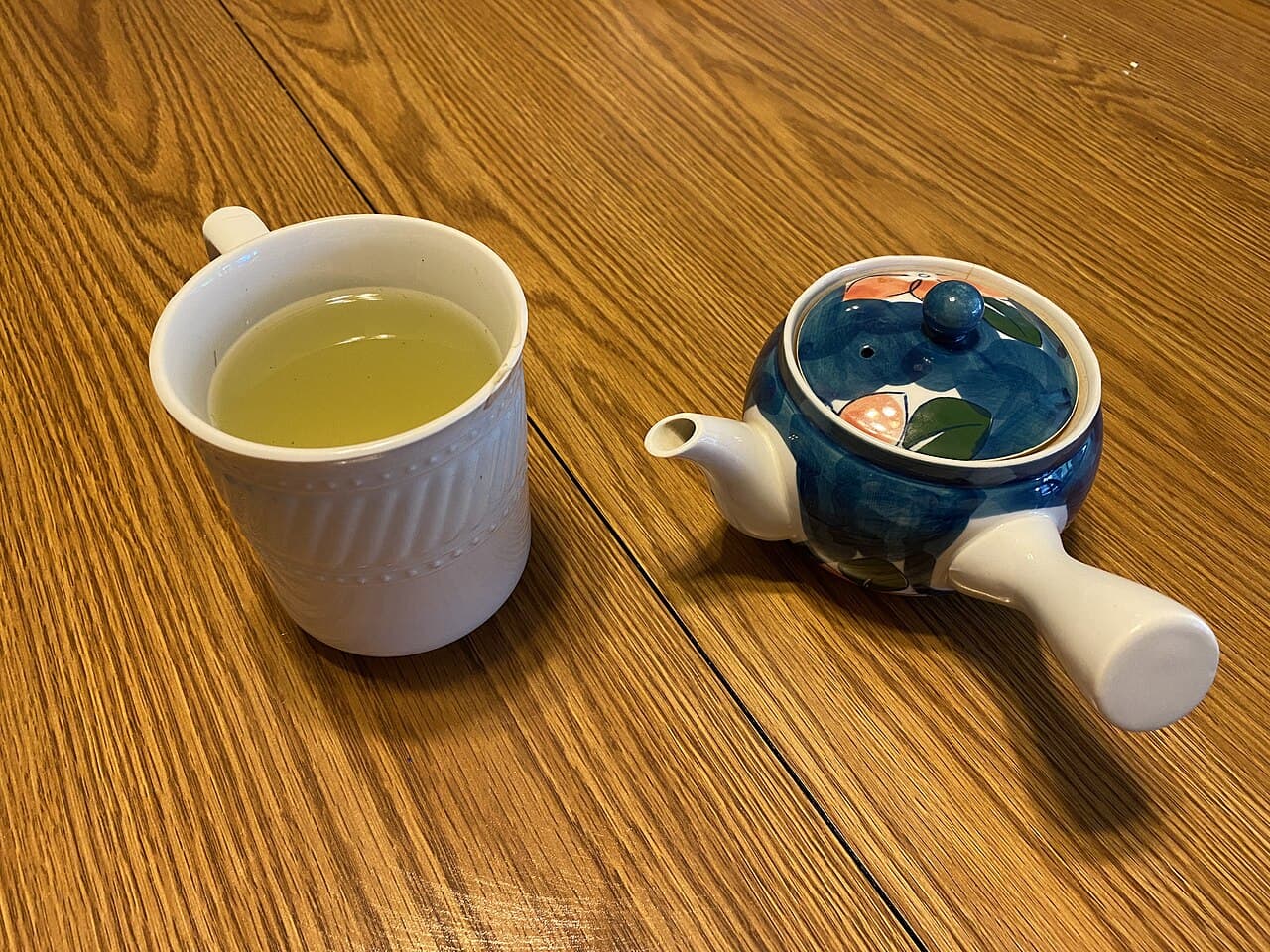
Kyusu (急須) is simply the Japanese word for teapot, though outside Japan it usually refers to the side-handled clay pot used for sencha and other green teas. The most common form is the yokode (横手) style, with the handle set at roughly 90 degrees from the spout; you'll also see ushirode (後手) pots with a rear handle that reads more like a Western teapot, and uwade (上手) pots with a handle arching over the top, closer to a kettle. Tokoname, in Aichi prefecture, is one of the best-known production centers for clay kyusu.
Three parts do the work: the spout, angled so tea doesn't dribble back down the outside as you stop pouring; the lid, which needs its small air hole to sit correctly (usually facing the spout) or the tea won't pour smoothly; and the built-in strainer, which keeps the leaves in the pot while the liquid pours out.
Two kinds of built-in strainer
Almost every kyusu uses one of two strainer designs, and knowing which one you have changes how you pour and how you clean it.
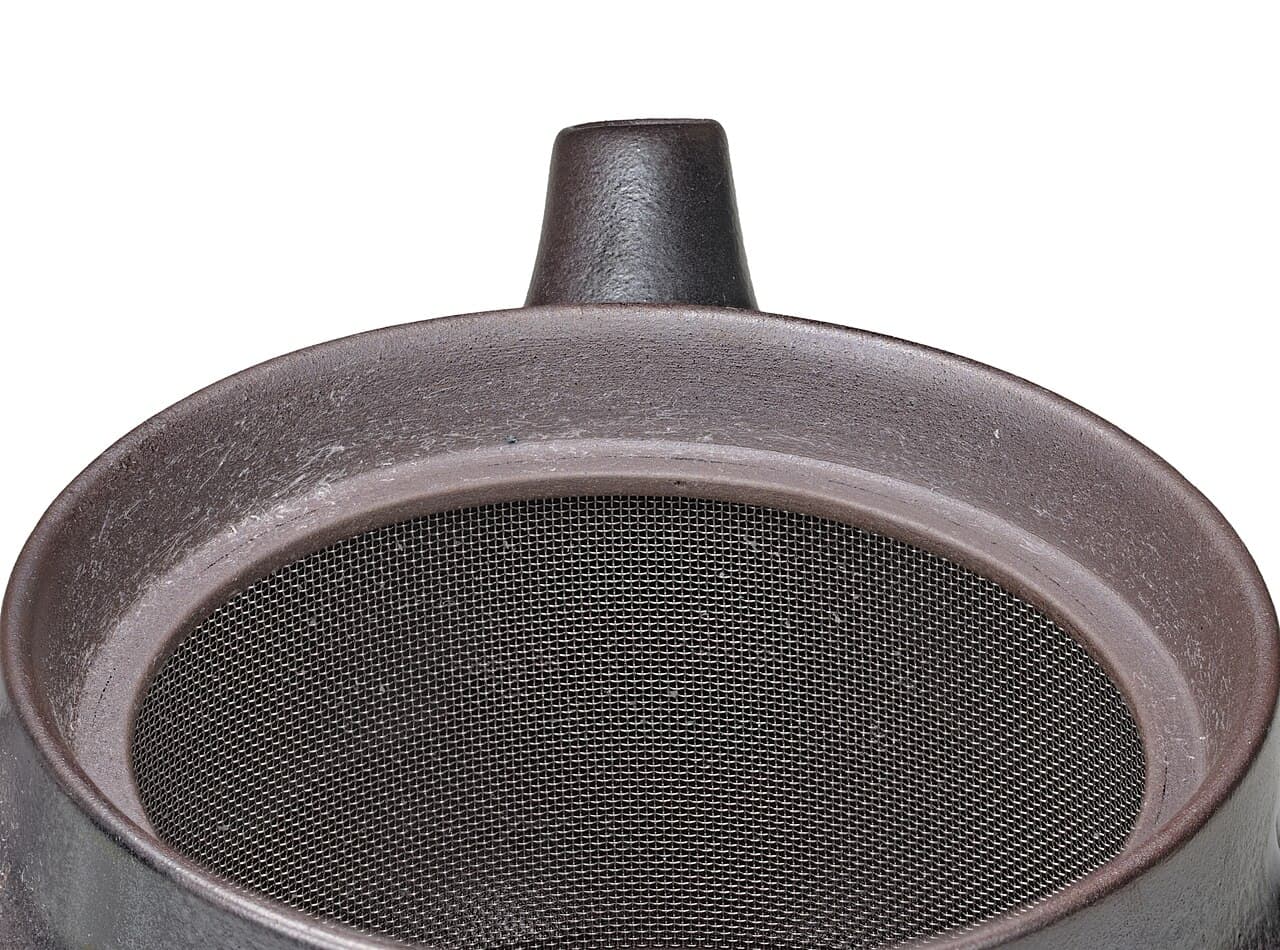
Mesh strainers are a separate stainless-steel screen — either a removable basket that sits inside the pot or a fine mesh band fitted around the whole interior wall (帯網, sometimes called a "band mesh"). A full-interior band mesh covers the whole inside of the pot rather than sitting in one spot — the Tokoname kiln ukou.jp markets this as the best fit for the fine, broken particles in deep-steamed sencha.
Ceramic strainers are part of the pot itself: a patch of small holes, or a fine mesh pattern, formed and fired into the clay near the spout, using the same material as the body. Because there's no separate metal fitting taking up space, there's more room inside for leaves to unfurl. Older, simpler ceramic strainers used larger perforations drilled straight into the clay wall; modern ceramic strainers use a finer, flatter mesh pattern — makers sometimes market this style as "ceramic mesh" — designed to resist clogging with the smaller, more broken leaf particles common in deep-steamed sencha. Some tea drinkers prefer a ceramic strainer over a metal one specifically because it has no metal surface in contact with the tea.
Neither design is strictly better; deep-steamed teas with a lot of fine particulate tend to get along better with a finer mesh, whichever material it's made from.
How to pour so every cup tastes the same
The tea coming out of a kyusu doesn't stay the same strength from the first second to the last — it starts thinner and gets progressively stronger as the pot empties, because the leaves keep releasing flavor into the water that's still sitting against them. If you fill one cup completely before moving to the next, the first cup ends up weaker and the last cup ends up much stronger, even though everyone is drinking from the same pot.
The fix is a back-and-forth pour: give each cup a small amount, then circle back and add a bit more to each, repeating in short passes (often described as three to five passes) rather than pouring straight through in one go. This distributes the changing strength evenly across every cup instead of loading it all into whichever cup happens to be filled last.
Pour to the last drop
Keep pouring until the pot is genuinely empty — the very end of the pour, sometimes called the "golden drop," carries the most concentrated flavor of the whole infusion, so stopping early and leaving liquid behind means the strongest part never makes it into anyone's cup. There's a second, practical reason to empty the pot completely: any liquid left sitting on the leaves keeps steeping after you've stopped pouring, so by the time you go back for a second infusion, the leaves have already been oversteeping in that leftover water, which tends to push the next cup toward bitterness. Emptying the pot fully each time is also what makes it possible to get two or three infusions out of the same leaves without the later ones turning harsh.
After you're done: rinse, don't scrub, dry it out
Kyusu care is deliberately low-effort, and the effort that does exist is mostly about what to avoid. Tip out the spent leaves right away, then rinse the pot with hot water only — no dish soap or detergent. Unglazed and lightly glazed clay is porous enough to absorb soap residue, which can carry over into the next pot of tea. If leaves or sediment are stuck in the strainer, a soft brush (an old toothbrush works) clears them without scratching the mesh; metal scouring pads can damage a fine strainer, ceramic or steel.
Once rinsed, let the pot dry out fully before the next use, rather than leaving it damp with the lid on — some Tokoname makers recommend standing the body upside down, lid off, so water doesn't sit and pool in the strainer. Don't leave wet or spent leaves sitting in the pot for hours or days between uses; besides the smell, damp leaves left in a warm, enclosed pot are exactly the conditions that encourage mold. A kyusu that's rinsed and dried after every use, rather than "cleaned" occasionally with soap, is the one that lasts.
Light brown staining on the interior over months of regular use is normal — it's tannin buildup, not dirt, and plenty of daily-use kyusu owners don't bother removing it. If you do want it gone, the routine one Tokoname maker describes is an occasional soak in a mild diluted bleach solution (about 1%), left overnight, followed by a thorough hot-water rinse — not an everyday step, just an occasional one.
What the pot doesn't do for you
Getting the pour and the strainer right solves for evenness and for keeping leaves out of your cup — it doesn't set water temperature, leaf amount, or steeping time, which do the rest of the work in how the tea actually tastes. For that half of the process, see how to brew sencha.
Sources
FAQ
- Why do you pour a kyusu back and forth between cups instead of filling one at a time?
- Because the liquid coming out changes strength as the pot empties — thinner at first, stronger toward the end. Giving each cup a small amount, then circling back to add more, spreads that change evenly so no single cup ends up weaker or stronger than the others.
- Should I wash a kyusu with soap?
- No. Rinse it with hot water only. Clay is porous enough to absorb soap residue, which can carry into the next pot of tea; a soft brush handles any stuck leaves in the strainer without soap or scouring pads.
- What's the difference between a mesh strainer and a ceramic strainer in a kyusu?
- A mesh strainer is a separate stainless-steel screen — a removable basket or a band fitted around the interior wall. A ceramic strainer is holes or a fine mesh pattern built into the clay body itself during firing, using the same material as the pot, which leaves more interior room for leaves to unfurl.
This article is for information only, not health or medical advice — we describe tea, not what tea will do for your body. Prices, availability and harvest details change; always check the linked vendor or official page before buying. Outbound links to vendors are plain links: we hold no affiliate accounts and earn nothing if you use them (see /how-we-review).